

UC Davis Fire Hosts Resuscitation Academy to Improve Cardiac Arrest Survival
The UC Davis Fire Department hosted the Resuscitation Academy on Oct. 5 and 6 at the UC Davis Conference Center, bringing together leaders in emergency response from across California. The two-day event had one of the department’s highest academy turnouts to date.
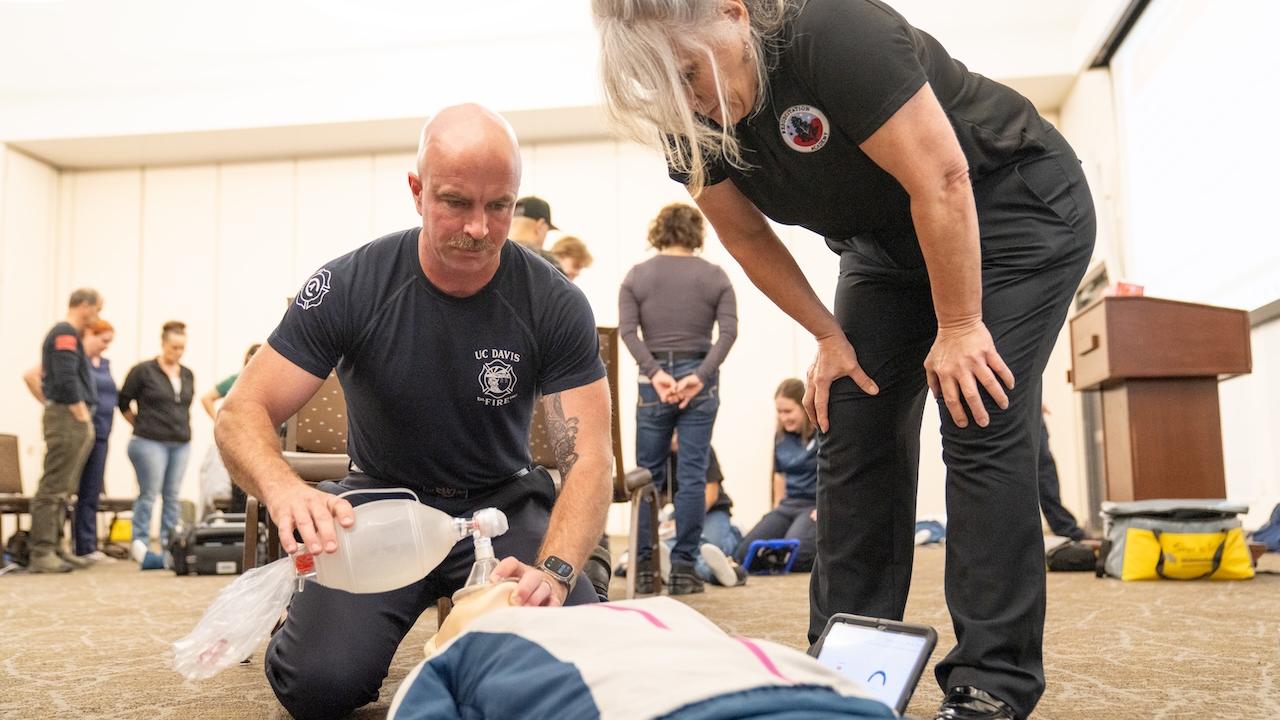
The academy teaches 10 steps designed to improve cardiac arrest survival. Presentations and hands-on workshops covered high-performance CPR, dispatch procedures and coordination among first responders.
UC Davis Fire is California’s only member of the Resuscitation Academy's Lighthouse Program, a national network of 15 agencies recognized for meeting high standards in emergency response and cardiac arrest care. Through this program, the department mentors other agencies working to improve cardiac arrest survival in their communities.
Turning training into action
To ensure accountability, attendees were encouraged to identify at least one action to implement within their departments. Participants met with colleagues to discuss strategies, including community awareness campaigns, improved dispatch procedures and high-performance CPR training.
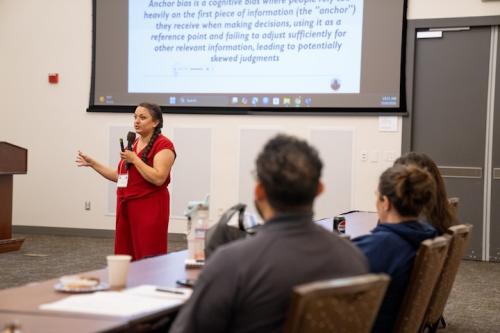
For the first time, the academy offered a workshop for emergency medical dispatchers, led by Dawn Shumway, former communications manager for Ada County in Boise, Idaho. The session focused on helping dispatchers provide effective CPR instructions over the phone before responders arrive.
“Our goal is that they will take what they learned, go back to their agencies and increase cardiac arrest survival in their area,” said UC Davis Fire Captain Scott Hatcher.
Bringing lifesaving practice to campus
The emergency response practices emphasized at the Resuscitation Academy also support ongoing efforts to improve cardiac arrest survival on campus. UC Davis Fire is working with Yolo County Emergency Medical Services and the UC Davis Police Department to improve emergency response practices and expand access to affordable CPR training.
A key priority is preparing community members to recognize cardiac emergencies, begin CPR quickly and follow instructions from emergency dispatchers. These early actions can significantly improve patients' chances of survival.
“We’re really empowering the community through lower-cost CPR training that’s more readily available for the campus,” Hatcher said.
Looking ahead
UC Davis Fire plans to continue supporting emergency response agencies across California. On campus, the department offers a Community Responder Program that provides faculty and staff with hands-on training in CPR, AED use and other lifesaving skills. The department hopes to encourage more agencies to adopt the academy’s 10 steps and achieve higher standards in emergency response and cardiac arrest care.
“We’re taking the leadership role in California to be those mentors to other agencies,” Hatcher said.
Through continued training and mentorship, UC Davis Fire aims to improve cardiac arrest survival across the state. The department’s long-term goal is to help make California a national leader in cardiac arrest survival.